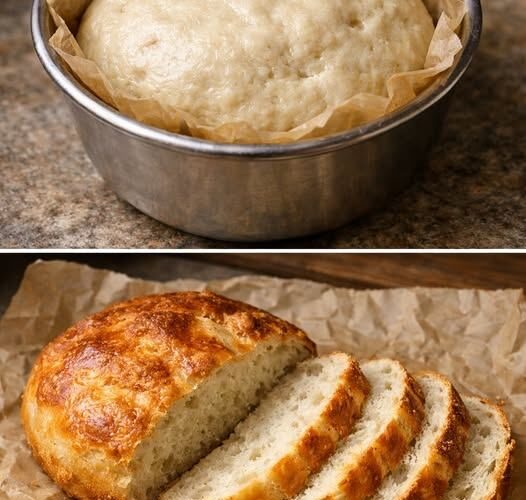
A Foolproof Homemade Bread Recipe for Beginners
If you’ve ever wanted to bake bakery-style bread at home without complicated techniques, this no-knead bread recipe is exactly what you need. Designed for simplicity and incredible flavor, this method produces a crispy crust artisan loaf with a soft, airy interior—using minimal effort and basic pantry ingredients.
This recipe has become a global favorite because it removes the hardest part of bread-making: kneading. Instead, time does the work for you. With a long fermentation process, the dough naturally develops gluten, structure, and deep flavor—similar to traditional sourdough, but without the need for a starter.
Whether you’re new to baking or looking for a simple homemade bread recipe, this method guarantees consistent and delicious results every time.
Recipe Difficulty Overview
- Preparation Effort: Very easy (1/5)
- Fermentation Effort: Hands-off (0/5)
- Baking Effort: Moderate (3/5 due to oven handling)
- Overall Skill Level: Beginner-friendly
This makes it one of the best easy bread recipes for beginners
Why This No-Knead Bread Recipe Works So Well
Unlike traditional bread recipes that require kneading to develop gluten, this method relies on slow fermentation. Over time, the dough builds structure naturally.
Here’s why it’s effective:
- Long resting time improves flavor
- Minimal handling keeps air bubbles intact
- High hydration creates a soft interior
- Steam baking creates a crispy crust
The result is a bakery-style artisan bread with a golden crust and chewy texture.
Understanding the Ingredients and Their Role
1. All-Purpose Flour or Bread Flour (3 cups / 375g)
Flour is the main structure of the bread. Bread flour gives a slightly chewier texture due to higher protein, while all-purpose flour works perfectly for a softer crumb.
2. Salt (1½ teaspoons)
Salt enhances flavor and strengthens the dough structure. It also controls yeast activity during fermentation.
3. Instant Yeast (½ teaspoon)
A small amount of yeast is all you need because the long fermentation allows it to multiply and develop flavor gradually.
4. Warm Water (1½ cups / 360ml)
Water hydrates the flour and activates the yeast. The dough should be sticky and loose—this is key to achieving an airy bread texture.
5. Optional Sugar or Honey (1 teaspoon)
This optional ingredient slightly speeds up fermentation and adds a mild sweetness, but it is not required.
Essential Tools for Success
To make this easy no-knead bread, you’ll need:
- Large mixing bowl
- Wooden spoon or spatula
- Clean towel or plastic wrap
- Dutch oven or heavy pot with lid
- Parchment paper (optional)
- Cooling rack
A Dutch oven is especially important because it traps steam, which creates that signature crust.
Step-by-Step Process Explained in Detail
Step 1: Mixing the Dough (5–10 Minutes)
Start by combining flour, salt, and yeast in a large bowl. Mix them evenly so the yeast is distributed throughout.
Slowly add warm water while stirring with a spoon. The dough will look:
- Sticky
- Rough
- Slightly messy
This is exactly how it should be. Unlike traditional bread, you should not knead this dough.
The goal is simply to hydrate all the flour. Once there are no dry patches left, cover the bowl with a towel or plastic wrap.
Step 2: Long Fermentation (12–18 Hours)
Place the covered bowl at room temperature and let the dough rest for 12 to 18 hours.
During this time:
- The dough will rise
- Bubbles will form on the surface
- Flavor will develop naturally
Ideal temperature is around 20–24°C. Warmer rooms speed up fermentation, while cooler rooms slow it down.
You’ll know the dough is ready when:
- It has doubled in size
- The surface is dotted with bubbles
- It smells slightly tangy and yeasty
This slow fermentation is what gives the bread its artisan flavor and texture.
Step 3: Shaping the Dough (5 Minutes)
Lightly flour a clean surface and gently transfer the dough onto it.
Important tips:
- The dough will be sticky—this is normal
- Avoid pressing it too much
- Fold it gently over itself 2–3 times
This creates a rough ball shape while keeping air pockets intact.
Place the dough onto parchment paper or a floured cloth. Cover it and let it rest for another 30–60 minutes.
Step 4: Preheating the Oven (30 Minutes)
Place your Dutch oven (with lid) inside the oven and preheat to:
230°C (450°F)
This step is critical. A preheated pot creates steam when the dough is added, resulting in a crispy golden crust.
Step 5: Baking the Bread (45–50 Minutes)
Carefully remove the hot pot from the oven.
Using parchment paper, lift the dough and place it into the pot. Cover immediately with the lid.
Bake in two stages:
- Covered: 30 minutes
- Uncovered: 15–20 minutes
During baking:
- The bread will rise quickly (oven spring)
- The crust will turn golden brown
- A rich aroma will fill your kitchen
For a darker crust, bake uncovered for an extra 5 minutes.
Step 6: Cooling the Bread (1 Hour)
Once baked, remove the bread and place it on a cooling rack.
Let it cool for at least 1 hour before slicing.
This step is essential because:
- Steam inside the bread needs to escape
- Cutting too early makes the texture gummy
Patience here ensures the best final result.
Texture and Flavor Profile
This homemade artisan bread offers:
- Crispy, crackling crust
- Soft and airy interior
- Large irregular holes (classic artisan crumb)
- Mild tangy flavor from fermentation
It pairs beautifully with butter, soups, olive oil, or as sandwich bread.
Expert Tips for Perfect No-Knead Bread
- Do not rush fermentation
- Use a heavy pot for best crust
- Keep dough sticky (not dry)
- Avoid over-handling the dough
- Preheat the pot thoroughly
These tips help you achieve a professional bakery-style loaf at home.
Creative Variations to Try
1. Garlic Herb Bread
Add:
- Dried rosemary or thyme
- Minced garlic
2. Whole Wheat Version
Replace 1 cup of flour with whole wheat flour and add a little extra water.
3. Cheese Bread
Mix in shredded cheese before baking for a rich flavor.
4. Olive Bread
Add chopped olives for a Mediterranean twist.
Storage and Reheating Tips
- Store at room temperature for 2–3 days
- Avoid refrigeration (causes dryness)
- Freeze for up to 2 months
To reheat:
- Oven at 180°C for 10 minutes
- Or toast slices
Common Bread Problems and Solutions
Dense Bread
- Not enough fermentation
- Old yeast
Flat Bread
- Over-proofing
- Too much handling
Hard Crust
- Reduce uncovered baking time
- Brush with butter after baking
Gummy Interior
- Bread sliced too early
Nutritional Information (Per Slice Approx.)
- Calories: 160 kcal
- Carbohydrates: 30g
- Protein: 5g
- Fat: 1g
- Fiber: 1g
- Sodium: 290mg
Final Thoughts
This easy no-knead bread recipe proves that baking doesn’t have to be complicated. With just a few ingredients and patience, you can create a loaf that rivals professional bakeries.
It’s perfect for beginners, busy households, and anyone who loves fresh homemade bread with minimal effort.
Part 2: Simple Recipe Version
Ingredients
- 3 cups (375g) all-purpose or bread flour
- 1½ teaspoons salt
- ½ teaspoon instant yeast
- 1½ cups (360ml) warm water
- Optional: 1 teaspoon sugar or honey
Directions
- In a bowl, mix flour, salt, and yeast.
- Add warm water and stir until a sticky dough forms.
- Cover and let it rest for 12–18 hours at room temperature.
- Transfer dough to a floured surface and fold gently into a ball.
- Let it rest for 30–60 minutes.
- Preheat oven with a covered pot to 230°C (450°F).
- Place dough into hot pot, cover, and bake for 30 minutes.
- Remove lid and bake another 15–20 minutes until golden.
- Cool for 1 hour before slicing.
