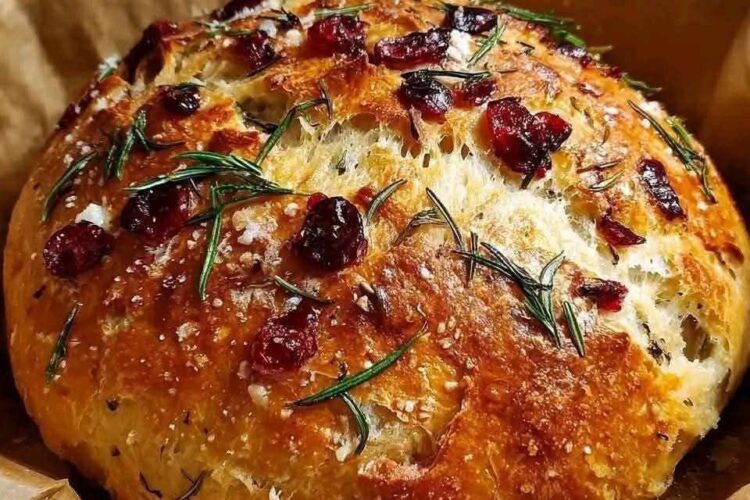
There is something comforting about baking homemade artisan bread from scratch. The aroma of warm bread drifting through the kitchen instantly creates a cozy atmosphere, especially when the loaf is packed with fragrant herbs, tart cranberries, and brushed with rich garlic butter. This rustic cranberry herb bread is the perfect combination of savory and slightly sweet flavors, making it ideal for breakfast, holiday dinners, soup pairings, or elegant brunch tables.
Unlike traditional sandwich bread, this easy no-knead bread recipe requires very little hands-on work. The slow overnight rise develops a deep flavor and creates a bakery-style texture with a crispy golden crust and soft chewy center. Even beginner bakers can achieve beautiful results with this simple Dutch oven bread method.
The addition of dried cranberries brings subtle sweetness and chewy texture to every bite. Fresh rosemary and thyme infuse the dough with earthy herbal notes that complement the garlic butter topping perfectly. Once baked, the loaf is brushed with melted garlic herb butter, creating a flavorful finish that tastes just like gourmet artisan bakery bread.
This rustic loaf is perfect during the holiday season, but it is delicious enough to enjoy year-round. It pairs beautifully with soups, roasted vegetables, cheese boards, grilled chicken, and pasta dishes. Many people also enjoy serving slices with butter, cream cheese, or even toasted for breakfast.
One of the reasons this bread recipe is so popular is because it uses the no-knead bread technique. Traditional yeast bread recipes often require long kneading times and advanced bread-making skills. However, this overnight artisan bread relies on time rather than heavy kneading. During the long fermentation process, gluten develops naturally, giving the bread its signature chewy texture and airy crumb.
The Dutch oven baking method also plays an important role in creating bakery-quality bread at home. Preheating the Dutch oven traps steam during baking, which helps form a crispy crust while keeping the inside tender and moist. The result is a rustic homemade loaf that looks and tastes professionally baked.
Why This Cranberry Herb Bread Stands Out
This savory cranberry bread recipe offers a unique balance of flavors. The dried cranberries provide light sweetness without overpowering the herbs, while rosemary and thyme add depth and warmth. Garlic butter brushed over the warm loaf elevates the flavor even further, creating a rich and aromatic finish.
Many artisan bread recipes focus only on texture, but this recipe delivers both texture and flavor. The crust becomes beautifully crisp while the interior remains soft, airy, and flavorful. Every slice contains bursts of cranberries and fragrant herbs that make the bread feel special enough for entertaining guests.
Because the dough rises overnight, this bread develops a more complex flavor than quick breads or standard dinner rolls. Long fermentation enhances the yeast flavor naturally while improving texture and digestibility.
This bread is especially popular during autumn and winter gatherings because the cranberries and herbs create festive seasonal flavors. It is an excellent addition to Thanksgiving dinners, Christmas brunches, or cozy weekend meals.
The Secret Behind No-Knead Bread
No-knead bread recipes became incredibly popular because they simplify homemade artisan bread baking. Instead of spending time kneading dough by hand or with a mixer, the ingredients are simply mixed together until a sticky dough forms.
The moisture in the dough and the long resting period allow gluten strands to strengthen naturally. This process creates the chewy structure commonly found in artisan bakery bread.
Another benefit of this method is convenience. The dough can rest overnight while you sleep, making it easy to bake fresh bread the next day without complicated preparation.
The sticky dough may appear rough at first, but that is completely normal. Wet dough creates better air pockets during baking, leading to a lighter texture and crispy crust.
Choosing the Best Ingredients for Homemade Herb Bread
Using quality ingredients makes a noticeable difference in flavor and texture. Although this recipe uses simple pantry staples, each ingredient contributes important characteristics to the final loaf.
All-Purpose Flour
All-purpose flour provides structure and creates a chewy artisan-style texture. Bread flour can also be used for a slightly chewier result because it contains more protein.
Instant Yeast
Instant yeast helps the dough rise slowly and evenly. Because the dough ferments for many hours, only a small amount of yeast is required.
Dried Cranberries
Dried cranberries add natural sweetness and chewy bites throughout the bread. Their tart flavor contrasts beautifully with the savory herbs and garlic butter.
Fresh Rosemary and Thyme
Fresh herbs provide aromatic flavor and elevate the bread’s rustic quality. Rosemary offers pine-like earthy notes, while thyme contributes subtle warmth and depth.
Dried herbs may also be used if fresh herbs are unavailable, making the recipe flexible and convenient.
Warm Water
Warm water activates the yeast and hydrates the flour. Proper hydration is essential for achieving the airy texture associated with no-knead artisan bread.
Garlic Butter
The garlic butter topping transforms the bread into something truly irresistible. Melted butter infused with garlic and parsley creates a glossy finish and rich savory flavor that enhances every slice.
Tips for Perfect Artisan Bread Every Time
Allow Enough Rising Time
One of the most important steps in this recipe is the overnight rise. The dough should rest for at least 12 hours to fully develop flavor and texture. Longer fermentation often creates even better results.
Use a Preheated Dutch Oven
Heating the Dutch oven before baking helps create instant steam when the dough is added. This steam produces the signature crisp crust found in artisan bread.
Avoid Overworking the Dough
The dough should remain soft and sticky. Adding too much flour can create dense bread instead of a light airy loaf.
Bake Until Deep Golden Brown
A properly baked artisan loaf should have a rich golden crust. Removing the lid during the final baking stage allows the crust to become crispy and beautifully colored.
Brush with Garlic Butter While Warm
Applying garlic butter immediately after baking allows the bread to absorb maximum flavor while maintaining a glossy finish.
Serving Ideas for Cranberry Herb Bread
This homemade cranberry bread is versatile enough to serve with many meals and occasions.
Holiday Dinner Side Dish
The festive cranberries and herbs make this bread perfect for Thanksgiving and Christmas dinners.
Soup Companion
Serve warm slices alongside creamy tomato soup, chicken soup, butternut squash soup, or vegetable stew.
Cheese Board Addition
This artisan loaf pairs wonderfully with brie, goat cheese, cheddar, and aged parmesan.
Breakfast Toast
Toast leftover slices and spread with cream cheese, butter, or honey for a flavorful breakfast.
Sandwich Bread
Use thick slices for gourmet turkey sandwiches, grilled cheese, or roasted vegetable paninis.
How to Store Homemade Bread
Fresh homemade bread is best enjoyed within the first two days. Store the loaf wrapped loosely in foil or in a bread bag at room temperature.
Avoid refrigerating artisan bread because refrigeration can dry out the texture quickly.
For longer storage, slices can be frozen individually and reheated when needed.
Can This Bread Be Customized?
Absolutely. This rustic bread recipe can easily be adjusted with additional ingredients while maintaining its artisan quality.
Popular additions include:
- Chopped walnuts or pecans
- Shredded parmesan cheese
- Roasted garlic cloves
- Sunflower seeds
- Pumpkin seeds
- Cracked black pepper
- Honey drizzle
- Orange zest for added brightness
These optional additions create different flavor variations while preserving the rustic texture of the bread.
Why Homemade Bread Is Worth Baking
Homemade bread offers freshness and flavor that store-bought loaves simply cannot match. The crispy crust, soft interior, and rich aroma make baking from scratch a rewarding experience.
This easy artisan cranberry herb bread recipe proves that bakery-style bread can be made at home with simple ingredients and minimal effort. The overnight fermentation process does most of the work, while the Dutch oven creates professional-quality texture.
Whether served during holidays, family dinners, or cozy weekends at home, this savory herb bread with garlic butter is guaranteed to impress guests and satisfy bread lovers.
The balance of tart cranberries, fragrant herbs, crispy crust, and buttery garlic topping creates a loaf that feels both rustic and elegant. Once you try this easy homemade artisan bread recipe, it may become one of your favorite comfort foods to bake again and again.
Part 2: Easy Rustic Cranberry Herb Bread Recipe
Homemade No-Knead Cranberry Herb Bread with Garlic Butter
Ingredients
For the Bread Dough
- 3 cups all-purpose flour
- 1½ teaspoons salt
- ½ teaspoon instant yeast
- 1 cup dried cranberries
- 1 tablespoon freshly chopped rosemary (or 1 teaspoon dried rosemary)
- 1 tablespoon freshly chopped thyme leaves (or 1 teaspoon dried thyme)
- 1½ cups warm water
For the Garlic Herb Butter
- 4 tablespoons unsalted butter
- 2 garlic cloves, finely minced
- Small pinch of salt
- 1 tablespoon chopped fresh parsley (optional garnish)
Instructions
Step 1: Prepare the Dough
In a large mixing bowl, combine the flour, salt, instant yeast, dried cranberries, rosemary, and thyme. Pour in the warm water and stir until a wet sticky dough forms.
Cover the bowl tightly with plastic wrap or a clean kitchen towel. Leave the dough at room temperature for 12 to 18 hours until doubled in size and bubbly.
Step 2: Heat the Dutch Oven
Preheat the oven to 450°F (230°C). Place a Dutch oven with its lid inside the oven and allow it to heat for about 30 minutes.
Step 3: Shape the Bread
Transfer the dough onto lightly floured parchment paper. Dust your hands with flour if needed and gently shape the dough into a rough round loaf.
Step 4: Bake the Bread
Carefully place the dough along with the parchment paper into the hot Dutch oven. Cover with the lid and bake for 30 minutes.
Remove the lid and continue baking for another 10 to 15 minutes until the crust becomes deep golden brown and crisp.
Step 5: Make the Garlic Butter
While the bread finishes baking, melt butter in a small saucepan over low heat. Add minced garlic and a pinch of salt. Cook for 1 to 2 minutes until fragrant. Stir in chopped parsley if desired.
Step 6: Finish and Serve
Brush the warm bread generously with garlic butter before serving.
Serve warm with soups, salads, cheese boards, or holiday meals.
Recipe Details
- Prep Time: 10 minutes
- Bake Time: 45 minutes
- Rising Time: 12–18 hours
- Total Time: 13–19 hours
- Yield: 12 slices
- Calories: Approximately 210 calories per slice
Discover More Recipes
- Muffins
- Cookies
- Biscuits
- Cakes
- Cheese Recipes
- Homemade Bread Recipes
