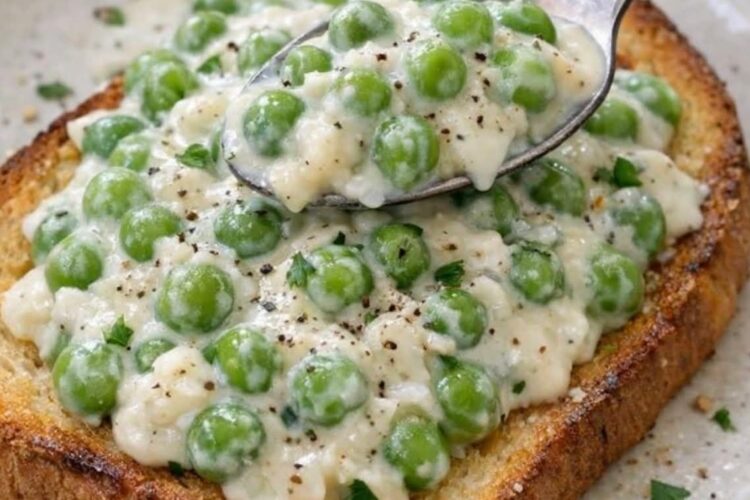
Creamy peas on toast is one of those dishes that quietly carries generations of home-cooked tradition. It may look simple at first glance, but beneath its humble appearance lies a deeply satisfying combination of textures and flavors that has stood the test of time. This dish brings together pantry staples and transforms them into something warm, nourishing, and incredibly comforting—perfect for anyone seeking an easy yet fulfilling meal.
At its heart, this recipe celebrates simplicity. It relies on everyday ingredients—peas, milk, butter, bread—and elevates them using classic cooking techniques. The result is a velvety, creamy topping paired with crisp, golden toast, creating a balance that feels both indulgent and familiar.
Why This Dish Continues to Be Loved
What makes creamy peas on toast so enduring is its versatility and emotional connection. It fits seamlessly into different parts of the day—whether served as a cozy breakfast, a quick lunch, or a light dinner. It’s the kind of dish that reminds people of home, of simpler times, and of meals made with care rather than complexity.
Unlike modern recipes that often rely on exotic ingredients or elaborate preparation, this dish thrives on accessibility. Most kitchens already have everything needed to prepare it, making it an excellent choice for quick meals without sacrificing taste or satisfaction.
The Harmony of Flavor and Texture
A key reason this recipe works so well is the balance it achieves between contrasting elements:
- Creaminess vs. Crispness: The smooth, rich sauce contrasts beautifully with crunchy toast.
- Sweetness vs. Savory Notes: Naturally sweet peas blend with savory butter, garlic, and seasoning.
- Richness vs. Freshness: The addition of lemon juice prevents the dish from feeling too heavy.
This harmony ensures that every bite feels complete and enjoyable, rather than one-dimensional.
Understanding the Ingredients – The Building Blocks of Flavor
Because this recipe uses a limited number of ingredients, each one plays a crucial role. Small changes in quality or preparation can significantly impact the final result.
Butter – The Flavor Foundation
Butter serves as the starting point of the dish. It not only provides richness but also acts as the medium for cooking aromatics like garlic and shallots. When melted gently, it releases a nutty aroma that enhances the overall flavor profile.
Using unsalted butter is ideal because it allows better control over seasoning. The butter also forms the base of the roux, which is essential for thickening the sauce.
Shallots and Garlic – Aromatic Depth
These two ingredients add complexity to the dish without overpowering it.
- Shallots bring a subtle sweetness and mild onion flavor.
- Garlic contributes a bold, savory aroma.
When sautéed in butter, they create a fragrant base that transforms a simple cream sauce into something more layered and interesting.
Flour – The Thickening Agent
Flour is used to create a roux—a classic cooking technique that gives structure to the sauce. When combined with butter and cooked briefly, it eliminates any raw taste and prepares the mixture to absorb liquid smoothly.
This step is crucial for achieving a sauce that is creamy and cohesive rather than watery or lumpy.
Milk – The Creamy Element
Milk forms the body of the sauce. Whole milk is recommended for a richer texture, but lighter options can also work if you prefer a less heavy dish.
When added gradually to the roux, milk transforms into a silky, smooth sauce that coats each pea perfectly.
Green Peas – The Star Ingredient
Frozen peas are the preferred choice for this recipe because they retain their natural sweetness, vibrant color, and slight firmness.
Unlike canned peas, frozen ones do not become mushy and provide a pleasant texture that complements the creamy sauce. They also cook quickly, making the dish efficient to prepare.
Seasonings – Simple but Essential
A small combination of salt, black pepper, and nutmeg enhances the dish significantly.
- Salt balances the flavors.
- Black pepper adds a mild heat.
- Nutmeg introduces a subtle warmth that complements the creamy sauce.
Even though these additions are minimal, they elevate the overall taste and make the dish feel more refined.
Lemon Juice – The Finishing Touch
A splash of lemon juice may seem like a minor detail, but it plays a critical role. It cuts through the richness of the butter and milk, adding brightness and preventing the dish from feeling overly heavy.
This final touch ties all the flavors together and enhances the natural sweetness of the peas.
Bread – The Perfect Base
The toast acts as both a foundation and a contrast. Thick slices of bread, such as rustic or sourdough varieties, work best because they hold up well under the creamy topping.
When toasted to a golden crisp, the bread adds texture and prevents the dish from becoming too soft.
The Cooking Philosophy Behind This Recipe
This dish is built on a few essential cooking principles:
1. Building Flavor in Layers
Rather than adding everything at once, each step builds upon the previous one. The butter carries the aromatics, the roux develops structure, and the milk transforms the mixture into a cohesive sauce.
2. Balancing Richness
Cream-based dishes can easily become too heavy. The addition of lemon juice and proper seasoning ensures that the final result remains light enough to enjoy comfortably.
3. Respecting Texture
Overcooking any component can ruin the dish. The peas should remain slightly firm, and the toast should stay crisp enough to support the sauce.
Step-by-Step Cooking Process Explained
Creating the Flavor Base
The process begins by melting butter gently. Once melted, finely chopped shallots are added and cooked until soft. This releases their natural sweetness.
Garlic is then added briefly to avoid burning while still releasing its aroma.
Forming the Roux
Flour is sprinkled into the mixture and stirred continuously. This forms a paste that acts as the thickening agent. Cooking it briefly ensures that the sauce will not taste like raw flour.
Developing the Sauce
Milk is added gradually while stirring. This step requires patience to ensure a smooth, lump-free consistency.
As the mixture heats, it thickens into a creamy sauce.
Seasoning for Depth
Salt, pepper, and nutmeg are added to enhance the flavor. Tasting at this stage allows for adjustments before the peas are added.
Cooking the Peas
Frozen peas are stirred directly into the sauce. They cook quickly and absorb the creamy flavors while maintaining their texture.
Adding Brightness
A small amount of lemon juice is added at the end to balance the richness.
Preparing the Toast
Bread is toasted until crisp and golden. This step is essential for achieving the right texture contrast.
Final Assembly
The creamy peas are spooned over the toast and served immediately.
Serving Ideas and Meal Pairings
This dish can be enjoyed in various ways depending on the occasion:
- Breakfast or Brunch: Pair with fresh fruit or yogurt.
- Light Lunch: Serve alongside a simple green salad.
- Dinner Option: Add grilled chicken or a poached egg for extra protein.
Creative Variations
You can customize this recipe easily:
- Add cheese for a richer version.
- Include fresh herbs for added freshness.
- Increase garlic for a stronger flavor.
- Add spices like paprika for a hint of heat.
- Top with eggs or protein for a complete meal.
Storage and Reheating Tips
- Store the creamy peas separately from the toast.
- Refrigerate for up to 3 days in an airtight container.
- Reheat gently on the stove, adding a splash of milk if needed.
- Toast fresh bread when serving again.
Why This Recipe Stands Out
This dish succeeds because it uses simple techniques to create something deeply satisfying. It proves that comfort food does not need to be complicated to be delicious.
The combination of creamy sauce, sweet peas, and crispy toast creates a timeless meal that works for any occasion.
Part 2: Simple Creamed Peas on Toast Recipe
Ingredients
- 2 tablespoons butter (unsalted)
- 1 small shallot (finely chopped)
- 2 cloves garlic (minced)
- 2 tablespoons all-purpose flour
- 2 cups milk (preferably whole milk)
- 2 cups frozen green peas
- Salt (to taste)
- Black pepper (to taste)
- Pinch of nutmeg
- 1–2 teaspoons lemon juice
- 4 slices bread (toasted)
- Optional: extra butter for toast
Instructions
- Melt butter in a saucepan over medium heat.
- Add chopped shallot and cook until soft.
- Stir in garlic and cook briefly until fragrant.
- Add flour and mix well to form a paste. Cook for 1–2 minutes.
- Slowly add milk while stirring continuously to avoid lumps.
- Cook until the mixture thickens into a smooth sauce.
- Add salt, black pepper, and nutmeg. Mix well.
- Stir in frozen peas and cook until heated through.
- Add lemon juice and adjust seasoning if needed.
- Toast the bread until golden and crisp.
- Spoon creamy peas over toast and serve immediately.
